Dock scheduling and yard management are often sold together. That does not mean they solve the same problem.
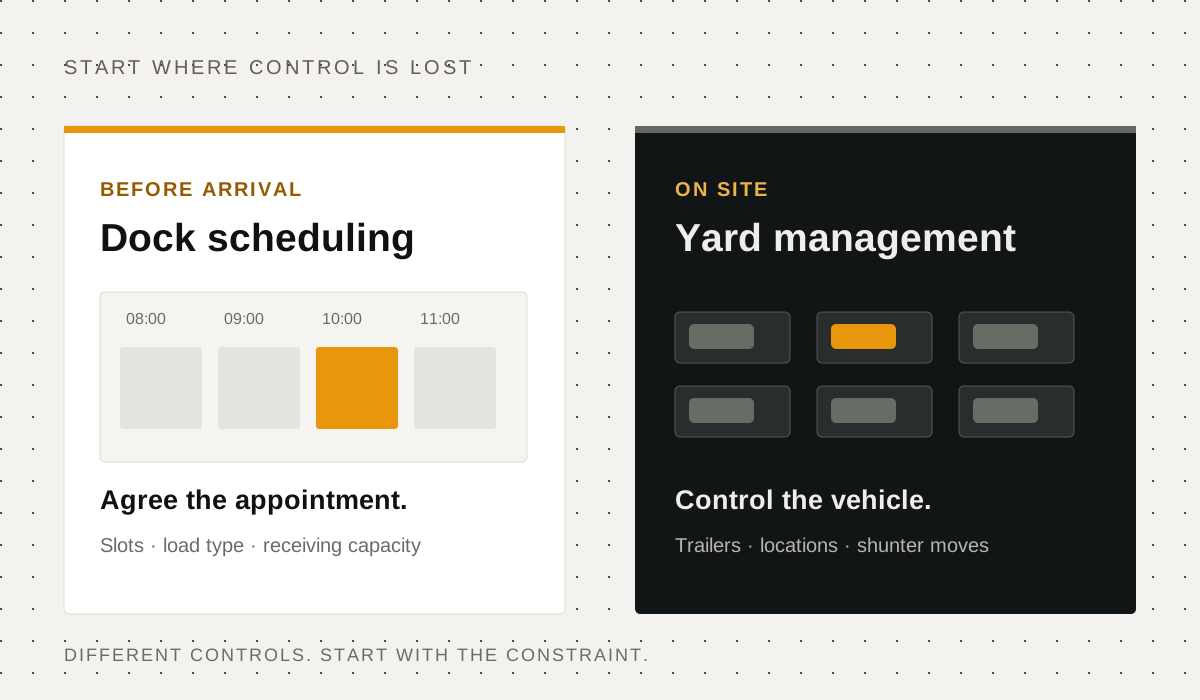
The simplest distinction is this: dock scheduling controls the promise before a vehicle arrives; yard management controls the vehicle after it arrives on site.
Before arrival: agree a workable appointment
Dock appointment scheduling answers practical questions such as: when can this supplier or carrier arrive? What type of load is it? Can the warehouse receive it in that window? What happens if it is late? It is about matching incoming demand to available doors, labour and receiving capacity before the gatehouse is dealing with a queue.
After arrival: control what is on site
Yard management starts later. It helps a site track a trailer after check-in, direct it to a location or door, manage shunter moves and see what is waiting, loading, unloading or ready to leave. For a large, busy trailer yard, that live control can be essential.
Find the first constraint
The distinction matters because warehouses often buy for the most visible symptom. A vehicle queue can look like a yard problem. But if the queue begins because appointments are arranged in email, nobody can see a change, and the warehouse has accepted more work than it can unload, a yard system will not fix the first constraint.
Ask one question: if every vehicle arrived exactly when it was supposed to tomorrow, would the site run materially better?
If the answer is yes, begin with delivery slot booking. You need a clearer process for setting appointments, applying capacity rules, handling changes and sharing the current plan with carriers and the warehouse team.
If the answer is no, because trailers are difficult to locate, door allocation changes constantly, or shunters are moving vehicles reactively, then yard management belongs in the evaluation too.
Choose the scope that fits the operation
There is no value in buying a larger platform than the operation needs. A site with a small yard may get the biggest improvement from a simple supplier booking portal and a live dock schedule. A site running a large trailer estate may need both dock scheduling software and a full yard-management system. The right answer comes from identifying where the day first loses control.
DockSync is designed for the scheduling-first problem: giving the warehouse a reliable way to offer, control and record dock appointments. If the real issue begins after a vehicle enters the yard, identify that early. It is better to define the constraint correctly than to buy a system that does not remove it.