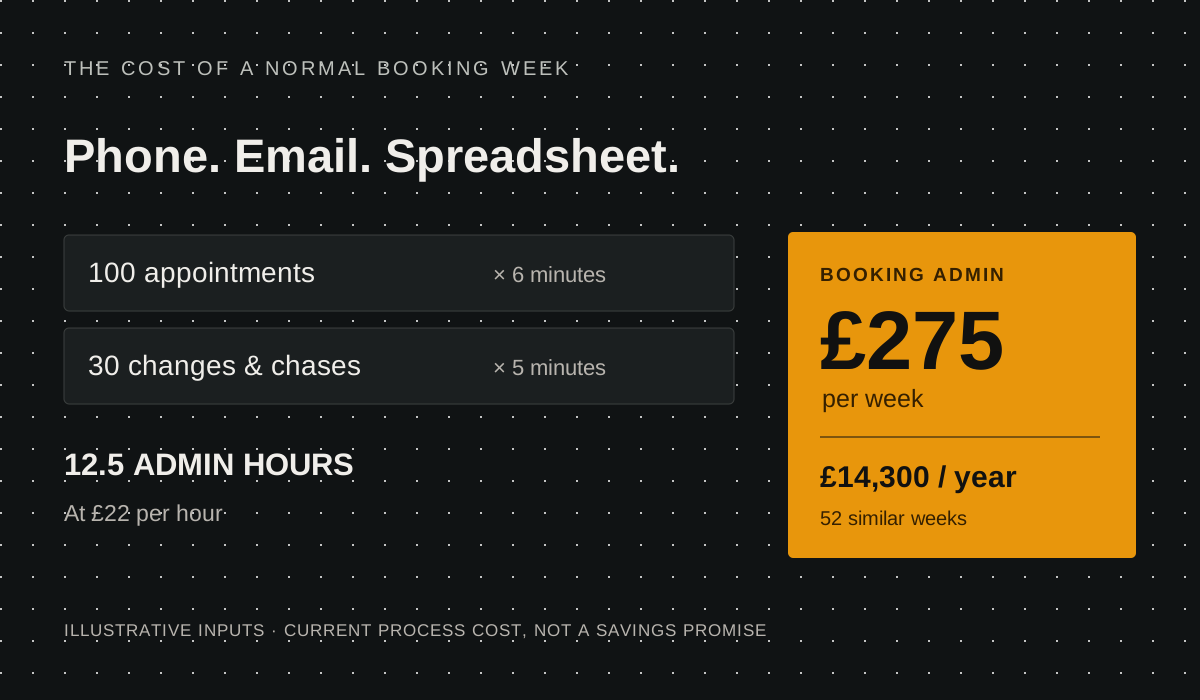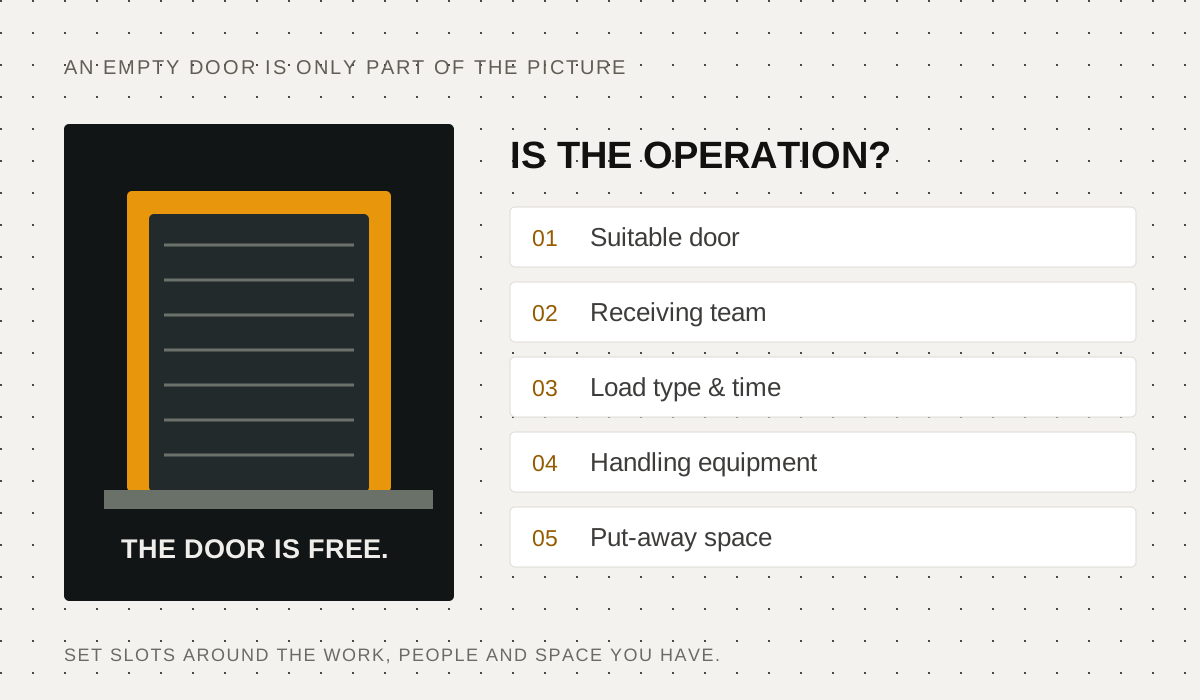
Self-booking sounds straightforward from inside the warehouse. Give suppliers and carriers a link, let them choose a delivery slot, and stop the phone calls.
From the other side, it can look like one more portal to learn and one more way a delivery could be refused. That is why the technology alone is not the rollout. The rollout is the operating agreement around it.
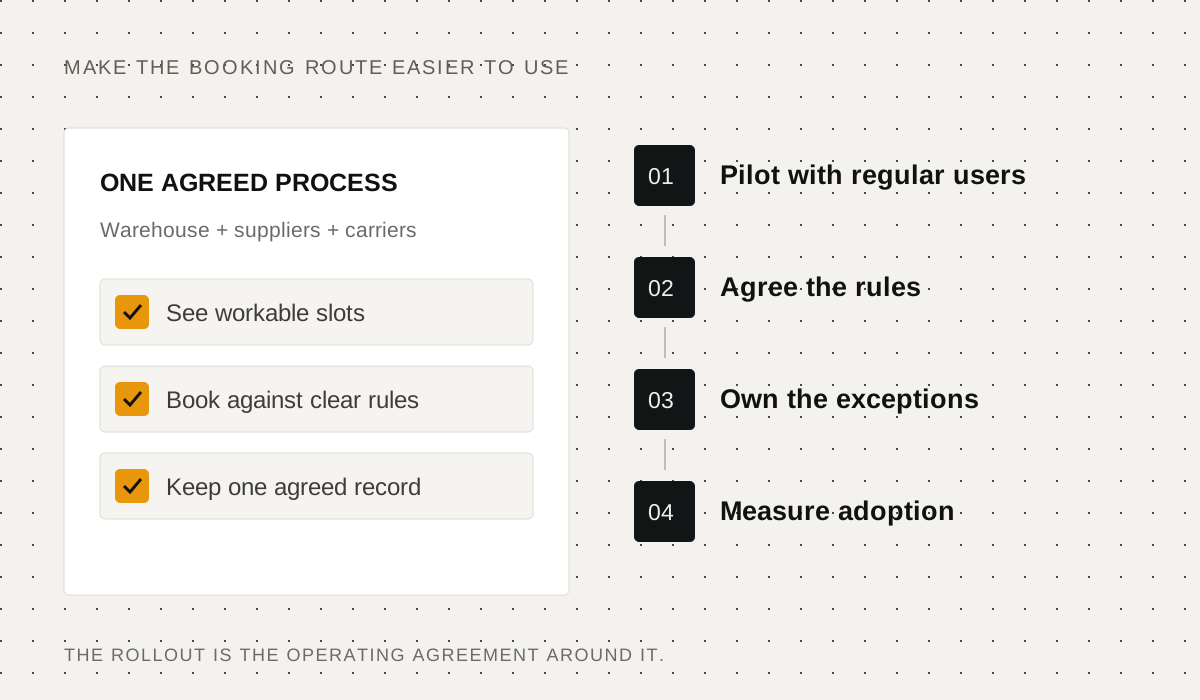
Start with regular users
The best place to start is with a small group of regular users: carriers or suppliers who know the site, have predictable activity and will tell you if something is impractical. Run the pilot through normal events, not just quiet days. A late vehicle, a reschedule, a rejected request and a genuine priority load will reveal whether the process is workable.
Make the operating rules clear
Before sending the booking link, make the rules clear. Carriers need to know what information is required, how much notice is needed, what each appointment type covers, what happens if they are early or late, and how to request an exception. This does not need to be a long policy document. It should be a short, plain operating guide that a transport planner can act on.
Give exceptions an owner
There must be an exception route. Vehicles break down. Production priorities change. Connections are missed. But an exception should have an owner and a record. If the warehouse leaves the old inbox open as the easiest way to arrange every appointment, it has simply added another layer of administration. The booking portal becomes a diary that somebody has to update afterwards.
Explain the benefit in the carrier’s terms
It also helps to explain the benefit in the carrier’s terms. The point is not that the warehouse has bought a platform. The point is that the carrier can see available slots, book or amend an appointment without waiting for a response, receive a clear confirmation, and refer back to an agreed record if the day changes.
Measure adoption and improve the process
Measure adoption after launch. Look at the proportion of appointments created through the supplier booking portal, the volume of calls and emails that remain, unplanned arrivals and the number of changes handled through the agreed route. If uptake is poor, examine the process before blaming the carrier. Is the booking link easy to find? Are the available slots realistic? Is the information requested reasonable? Is a reschedule genuinely easier than making a call?
DockSync gives the warehouse, suppliers and carriers one shared delivery-slot booking process. The value comes when that process is simpler than the workaround it replaces.