Before comparing dock scheduling software, calculate the cost of the process you have now. It takes five minutes and gives the discussion a more useful starting point than “we spend too much time on emails”.
The manual delivery-slot booking calculator
Use a normal week, not a peak week and not an unusually quiet one. Include inbound and outbound appointments if the same people arrange both.
Your weekly manual booking cost:
((A × B) + (C × D)) ÷ 60 × E = £____ per weekYour annual manual booking cost
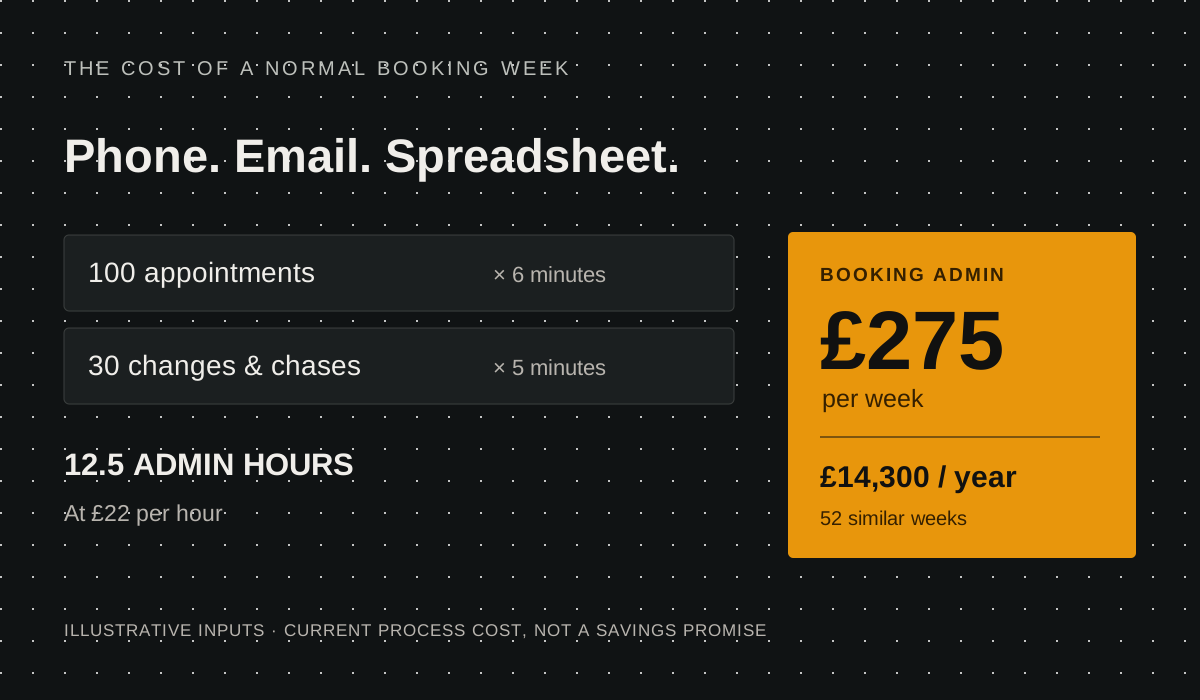
weekly cost × 52 = £____ per yearHere is a deliberately modest example. A site books 100 appointments a week. Each takes six minutes to arrange, and there are 30 changes or chases each week that take five minutes. At a loaded hourly cost of £22, the calculation is:
((100 × 6) + (30 × 5)) ÷ 60 × £22 = £275 per week
That is £14,300 a year in appointment administration before counting vehicle waiting time, disrupted receiving labour, detention disputes or lost throughput. It is not a promised saving from DockSync, but a transparent measure of the work the current process requires.
How the manual process grows
Most warehouses do not choose a manual delivery-slot booking process. It grows that way.
An inbox becomes the place to ask for a delivery slot. A spreadsheet becomes the plan. A good coordinator learns which carriers need chasing, which doors can take which loads, and when the receiving team can cope with an extra vehicle. For a while, that is enough.
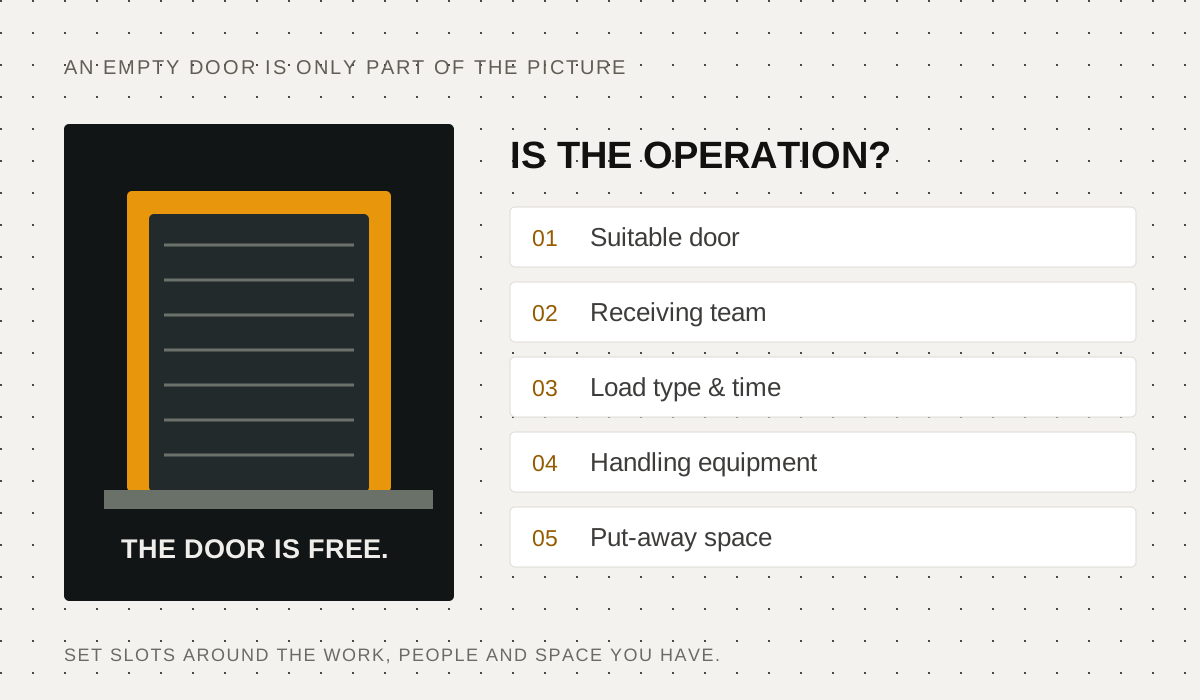
Then the operation gets busier. The booking process does not necessarily fail dramatically; it just starts creating small problems all day long. A vehicle is late, so someone calls to move it. Another arrives early and waits. A floor-loaded delivery appears in a window that the team had assumed would be a quick pallet unload. The spreadsheet says the door is free, but the person, forklift or put-away space is not.
After 10+ years in UK warehouse operations, this is the pattern I have seen most often: the team thinks it has a scheduling problem, but what it really has is a plan that lives in too many places and in one or two people’s heads.
The cost goes beyond administration
The calculator measures the visible administration. Do not stop there. The bigger cost is what happens when goods-in cannot work to a reliable plan.
Receiving labour is moved at the wrong time. Vehicles wait for a usable door. Put-away is disrupted by stock arriving in the wrong sequence. Supervisors spend the shift resolving exceptions instead of managing flow. Later, when a carrier questions a delay, the warehouse has to rebuild the story from an email, a handwritten note and someone’s memory.
Build the case around a reliable plan
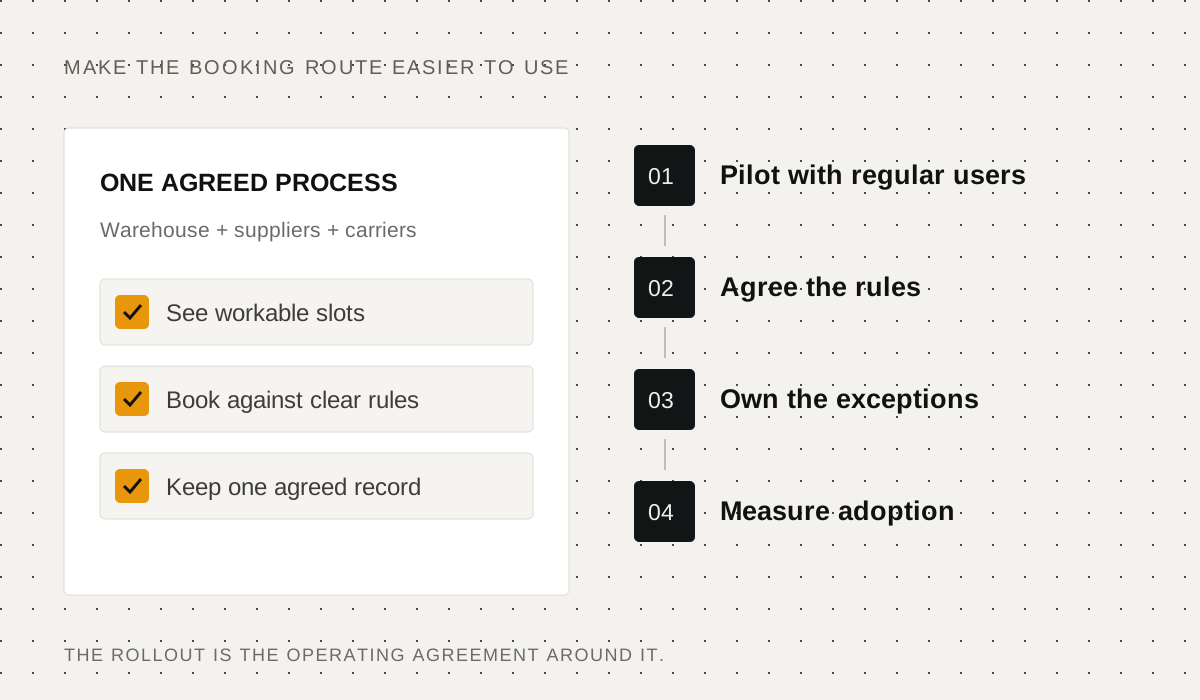
This is why a shared calendar alone rarely fixes the issue. A warehouse vehicle booking system needs to reflect real capacity and give every party one current view of the appointment. Suppliers and carriers should be able to see the slots they can use. The warehouse should be able to set workable rules. Changes should be recorded, not passed on by telephone. Arrival, door and departure times should be available when the day is reviewed.
That is what dock appointment scheduling is for. Not a prettier diary: a more reliable agreement between the warehouse and the vehicles arriving at it.
Pair the calculator with two operational measures for the same week: the number of arrivals that cannot be handled as planned, and the time between vehicle arrival and a usable door. Together, those measures give you a business case rooted in the site, not in a vendor’s promise.